
 Applications Closed
Consumer Products Fund
The Consumer Products Fund supports projects that promote truth-telling and consumer understanding regarding product ingredients and performance to protect people’s rights, health, and safety.
Projects that focus on consumer products or consumer technology for Californians, particularly vulnerable populations within California will be especially competitive.
Fund Details
Maximum Funding Request:
Up to $150,000
Important Dates:
- Unlike some of our other funds, the Consumer Product Fund is provided intermittently. We do not yet have an estimated time frame for when this fund will next become active.
Let’s Connect:
Have questions? Connect with our team via email at tbell@rosefdn.org.
Eligibility and Priorities
- Applicants must demonstrate expertise in consumer rights or consumer education, especially related to consumer products or consumer technology.
- The applicant must be a 501(c)(3) nonprofit or be fiscally sponsored by a 501(c)(3) nonprofit. Nonprofit colleges, universities, university clinics and graduate programs are eligible to apply, but university overhead is limited to 5% of grant award.
- An applicant's principal place of business must be within the United States.
- The class action settlement which directed these funds to Rose requires that we make grants for projects that primarily advance consumer rights or consumer education in the State of California. However, proposals for work conducted nationally or across multiple states may be eligible if the applicant can clearly articulate how the project would specifically benefit Californians relative to consumers in other states.
- Projects with mere tangential benefits to Californians will likely not be considered even if they may be worthwhile projects, i.e. a campaign for a federal health assessment of the bisphenol class of chemicals.
- Proposals must primarily support and enhance consumer rights or consumer education, and projects that focus on consumer products or consumer technology are especially encouraged.
- Only proposals designed to advance consumer rights or consumer education in the State of California are eligible for funding. However, proposals seeking general support, or which are conducted nationally or across multiple states are also eligible if the applicant can clearly articulate how the project specifically benefits Californians. Projects with mere tangential benefits to Californians will likely not be considered even if they may be worthwhile projects, i.e. a campaign for a federal health assessment of the bisphenol class of chemicals.
- Eligible activities include educating consumers about any consumer rights in California, law clinics or classes, promotion of best practices, policy and/or regulatory development and implementation, and general support for organizations primarily or wholly dedicated to advancing consumer product rights or consumer education in California.
Prohibited Activities
Applicants may not use this grant funding to engage in the following activities:
- Electioneering or other political or religious activities prohibited by IRS 501(c)(3) regulations.
- Activities primarily targeted or conducted outside of the United States.
- Litigation related activities are prohibited with these funds.
- Projects that focus on consumer products or consumer technology are especially encouraged.
- Proposals which specifically serve vulnerable or underserved populations including low income communities, people of color, students, seniors, veterans, immigrants, and non-English speakers conducted by organizations that have a demonstrated track record of working with these communities.
- Proposals with clear project goals, clear metrics to measure progress, and a clear and specific workplan.
- Proposals which have the potential to impact significant numbers of people.
- Proposals designed to affect long-term consumer behavior or ongoing educational activities that may continue beyond the grant period.
-
Most grants are for a one-year period; however, multi-year proposals are encouraged where appropriate.
-
The maximum allowable grant request is $150,000.
- Applicants are encouraged to seek funding for projects starting February 1, 2025, or later.
- Award and decline notifications will be sent out in January 2025.
-
Organizations that have been funded may only re-apply in the next cycle after their grant report has been submitted and approved. Organizations with an active grant from this Fund are not eligible to reapply.
Steps To Apply
Please read these instructions carefully and follow them step by step.
Review Eligibility Criteria and Application Materials
Please read the eligibility criteria and priorities above before starting an application.
Once you review the required application materials, you may download the application questions by starting an application and clicking the "download application questions" prompt.
FAQ

We will acknowledge the receipt of your application once it is submitted. If you do not receive this confirmation, please contact us. Please let your references know we will be contacting them.
Additionally, your application will undergo a review by our community funding board, composed of members from the community who care deeply about Consumer Product issues.
Grant decisions are usually made 3 months after the submission deadline.
If your group is awarded a grant, you must provide a final grant report within one year of receiving the money and before your group can receive additional funding. Please log on to your online application system and submit your report there.
- View the application questions here.
- Be ready to include the following attachments when you fill out the application online:
- Organizational budget for the current year.
- Organizational Year-to-Date Income and Expenses
- Organizational financial statement from the most recently completed fiscal year. You may use our combined Budget & Financial Template, or attach your own.
- Project budget and actual income and expenses if it is different from the organizational financial statements.
- Optional Additions:
- Letters of support (2 letters, maximum of 2 pages).
- Press clippings and/or pictures.
- Newsletters or other publications.
- You may use our combined Budget and Financial Statement Template, or attach your own.
- Helpful hints:
- If you are close to the end of your fiscal year, please give us the budget for the upcoming year if you have it.
- Please make sure to indicate what time period your financial statements cover.
- The budgets and financial statements should be for the applicant organization, not your fiscal sponsor.
Funding Board
-
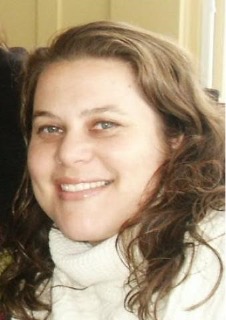
Kathryn Alcantar
For many years, Kathryn served as the California Policy Director for the Center for Environmental Health (CEH) and as the Campaign Director for Californians for a Healthy and Green Economy (CHANGE). Kathryn has over 15 years of experience working at the intersection of environment, health, and social justice in the private, government, and non-profit sectors. She joined CEH after two years of consulting for the nonprofit and philanthropic sectors while completing her joint Master’s in Public Health and Public Administration in Environmental Health Science and Policy at Columbia University. Kathryn completed a two-year fellowship at the San Francisco Foundation where she managed the Environmental Health and Justice Initiative and supported their $2 million annual environmental grant-making portfolio. As part of her work with Latino Issues Forum, the Greenlining Institute, and WE ACT for Environmental Justice, she has experience in policy and advocacy at the local, regional, state, and federal levels. The central goal of Kathryn’s work is to build power in low-income communities of color to engage in policy development that transforms their health, environment and economic opportunities. She was also a Senior Fellow with the Environmental Leadership Program and has a B.S. in Civil and Environmental Engineering from U.C. Berkeley.
-

Jim Kolinos, AIF
Jim is one of the founders of NWK Group, Inc and led the development and delivery of NWK Group services to institutional clients. Prior to co-founding NWK Group in 2002, he worked for boutique firm in San Francisco advising institutional retirement plans.
After 25+ years of serving retirement plan sponsors and participants, he has retired and shifted his focus to philanthropic endeavors. Jim remains a part of NWK Group as a strategic advisor and is available to discuss historical client related matters.
Jim has a Bachelor of Science in Biochemistry from the California Polytechnic State University in San Luis Obispo, Calif. In 2009 Jim earned the Accredited Investment Fiduciary (AIF®) designation.
In addition to serving on the Rose Foundation Board, Jim volunteers for the Leukemia & Lymphoma Society and is a coach for its Team in Training program. He has competed in two Ironman distance triathlons and uses his experience to help other athletes train for Ironman distance triathlons and raising money for cancer research.
-

Stacy Malkan
Stacy Malkan is co-founder and managing editor of U.S. Right to Know, a nonprofit investigative research group focused on promoting transparency for public health. She reports on pesticide industry disinformation campaigns, environmental health science and market developments for safer products. Stacy is author of the award-winning book, Not Just a Pretty Face: The Ugly Side of the Beauty Industry (New Society, 2007), and co-founder of the Campaign for Safe Cosmetics, a coalition of health groups that exposed hazardous chemicals in nail polish, baby products, make-up and hair products and pressured companies to reformulate to safer products. Her work has been published in Time magazine, New York Times, Washington Post, Nature Biotechnology, and many other outlets. Stacy is the former communications director for Health Care Without Harm, an international coalition of health groups working to transform health care so it is no longer a source of environmental harm.
-

Charlie Pizarro
Charlie has enjoyed countless career-defining benefits of a thirty-plus year career in social justice non-profits. Early on, h supported community development and immigration projects in a low-income Latino neighborhood in San Francisco. He also spent more than twenty years gathering and sharing stories to help legal teams defend people from the death penalty. Later, he worked for thirteen fulfilling years as the number two at the Center for Environmental Health — a non-profit that protects people and the environment from the reckless greed of the petrochemical industry. Today, he works as a consultant, drawing on his experiences as a listener, a storyteller, and non-profit lifer to support activists, nonprofits, artists, survivors of the criminal justice system, immigrants, public servants, students, small businesses, and other heroes who fortify their communities and change the world.
-

Hayley Tsukayama
Hayley Tsukayama is a legislative activist for the Electronic Frontier Foundation, focusing on state legislation. Prior to joining EFF, she spent nearly eight years as a consumer technology reporter at The Washington Post writing stories on the industry’s largest companies. Ms. Tsukayama, who is CIPP/US certified by the International Association of Privacy Professionals, has an MA in journalism from the University of Missouri and a BA in history from Vassar College. She was a 2010 recipient of the White House Correspondents’ Association scholarship.
-

Olivia Wein
Olivia Wein has been an attorney at the National Consumer Law Center (NCLC) for over 20 years. Olivia focuses on policies and programs that protect low-income consumers’ access to essential utility services, including energy, water, and broadband service. Olivia works on the federal Low Income Home Energy Assistance Program (LIHEAP), Weatherization and Lifeline programs, and intervenes in federal and state utility commission proceedings in matters affecting low-income utility consumer programs and protections. She is co-author of NCLC’s Access to Utility Service and co-author of The Rights of Utility Consumers. Olivia serves on the boards of the Universal Service Administrative Company and the National Energy and Utility Affordability Coalition and she serves on the Federal Communication Commission’s Consumer Advisory Committee.
Meet Past Grantees
From grassroots community organizers to groups with nation-wide reach, meet the changemakers supported by Rose grants.


Take the next step
Do you still have questions about this application process or need additional support from Rose Foundation staff? Here are some helpful resources.
Helpful Resources

Stay Connected
Change is happening! Receive updates on grantee successes, upcoming grants, and opportunities to make a difference. Join our community and be a vital part of the environmental justice movement.
We respect your privacy. Please refer to our Privacy Policy to learn how we handle your information.